Does Duplicate Content Negatively Impact Google Rankings?
.avif)

Duplicate content is a topic that’s often discussed, but not always fully understood. For years, SEOs have been debating whether duplicate content can hurt Google rankings. The short answer? It's not as black-and-white as you might think. Google doesn’t penalize you directly for duplicate content, but that doesn’t mean it won’t affect your site’s performance.
Let’s break down what duplicate content is, what Google has to say about it, and how you can manage it without risking your rankings.
Key Takeaways:
- Google doesn't directly penalize duplicate content unless it's designed to manipulate rankings.
- Google may ignore duplicate pages or choose the most authoritative, relevant version.
- Google's September 2025 Spam Update targeted content it considered repetitive or intended to cheat algorithms, affecting businesses with multiple location pages.
- Duplicate content doesn't automatically result in penalties, but it can still hurt SEO.
- AI-generated content can be flagged as duplicate if it follows repetitive patterns.
- Tools like Google Search Console, Screaming Frog, and Semrush can help detect duplicate content on your site.
- Use canonical tags for similar content, 301 redirects for obsolete pages, and noindex for pages to be excluded from search results.
What is Duplicate Content?
Duplicate content is blocks of text that are either identical or nearly identical across different pages or websites. This can happen both internally (on your own site) or externally (on someone else’s). Here’s a quick look at the main types:
What are the Types of Duplicate Content?
Internal Duplicate Content
Internal duplicate content is when the same content appears on multiple pages within the same site.
Think about an e-commerce site where the product description is copied on several pages, or when a product exists on a product page and a related category; this is internal duplication
External Duplicate Content
External duplicate content happens when your content is copied and published on another website. If another site takes your blog posts and reuses them, that’s external duplication.
On the same e-commerce website, external duplication would happen when another website copies the same product description and uses it on their own product page.
Near-Duplicate Content
This one is sneaky. These are pages with content that’s almost the same, but not quite. They might have minor changes like swapped words or reordered sections. Google will still treat this as similar enough to be flagged.
Why? Because they provide the same value to users, Google won’t know which version to prioritize.
Examples:
- A local business website offering gutter cleaning with landing pages for both Reston and Fairfax, Virginia.
- These pages use the same template and structure, with only slight variations in wording (swapping "Reston" for "Fairfax," or vice versa).
Exact Duplicate Content
Exact duplicate content happens when two or more pages are identical. That means text, structure, and overall content are 100% the same. Not a single word or sentence was changed.
Google will treat two pages with the same content as duplicates. It may not index the version you want, because it’s redundant to show two identical pieces in the same search results.
The preferred version is usually the one with more authority and will show in the SERPs (search engine results pages).
Examples:
- You have both a product and a category page for “Pink wristbands for events.”
- You have an article on your website titled “Top 10 AI-Tools for Marketing in 2026,” and another website copies your article word-for-word and posts it on their own site.
Boilerplate Copy (Headers, Footers, CTAs)
Boilerplate copy is text or sections that are repeated on several pages. For example:
- Headers and footers, like navigation menus and company information.
- Calls to action, such as “Contact Us,” “Get Started Today” buttons, and text.
- Terms and Conditions, privacy policy, or other legal disclaimers.
This type of duplicate content is not penalized by Google because it’s necessary for a functioning website.
AI-Generated Similarity (Content 'Echoes' or Pattern Reuse)
AI-generated similarity happens when content created by AI tools is too similar across multiple pages, even if it’s not exactly identical.
This happens because AI systems are fed templates or patterns when making content. While AI is incredibly powerful, it can sometimes churn out similar phrases, structures, and vocabulary across multiple pages.
Even if these pages look different, they may still be seen as too similar by search engines. Google’s algorithm recognizes patterns. For example:
- An opening question to hook the reader
- A bullet-point list of tips or steps
- A neat summary or conclusion with a call to action at the end
Example:
A website with articles about different types of marketing tactics using an AI tool to create a set of articles. These articles would follow the same title pattern:
- "How to Fix Broken External Links in 5 Easy Steps."
- "How to Fix Structured Data in 5 Easy Steps."
- "How to Fix Hreflang Issues in 5 Easy Steps."
What Google Has to Say About Duplicate Content
Here’s the good news: Google doesn’t actually penalize you for duplicate content unless it’s being used to deceive or manipulate rankings. According to Google:
It might penalize:
- Pages with duplicate content designed to game the system, like scraped content or “cookie-cutter” affiliate pages. If duplicate content is hurting the user experience, it could affect your rankings.
It won’t penalize:
- Legitimate duplicate content like syndicated articles or product descriptions across different pages (as long as they’re useful).
So, Does Google Penalize Duplicate Content?
No, Google does not penalize duplicate content unless it’s written to manipulate rankings. They don’t focus on penalizing you. They want to show the most relevant content in search results (SERPs).
When duplicate content is detected, it might simply ignore the duplicate pages or consolidate their authority into the original, more relevant version.
The goal is to show the user the best possible result, rather than showing multiple pages with the same or very similar content.
Google’s September 2025 Spam Update and Duplicate Content
Google’s Spam Update from September 2025 changed the way content is ranked and evaluated. The update specifically targeted content created with SEO manipulation in mind, changing how Google detects and filters out “spammy” content.
These changes obviously impacted duplicate content that was trying to exploit ranking algorithms. Websites that relied on repetitive, cookie-cutter content, especially across multiple pages, were hit hardest.
For example, businesses with location landing pages that used identical templates across different cities or regions were flagged for lacking originality. With similar structures, headings, and content order, Google struggled to differentiate these pages, which likely led to a drop in rankings.
Why Is Having Duplicate Content An Issue For SEO?
Even though Google doesn’t penalize duplicate content directly, having too many similar pages on your site can still hurt your Search Engine Opitmization. Here’s how:
- Crawling and Crawl Budget: Google has a limited amount of time and resources to crawl your site. If there’s too much duplicate content, important pages might get overlooked. Essentially, Google might waste time crawling duplicates instead of focusing on the pages that matter.
- Indexing and URL Selection: When Google sees multiple versions of the same content, it may index only one version, even if the pages have different purposes. This means your content could be ignored in favor of another, limiting your site's visibility.
- Rankings and Keyword Visibility: Duplicate content can create confusion for Google about which page should rank for a particular keyword. When several pages compete for the same term, it leads to keyword cannibalization, where none of the pages rank as well as they could because they’re essentially fighting each other.
- Local SEO Pages: For businesses with multiple locations, using nearly identical content across location pages can hurt your local SEO. If your city pages for places like New York and Washington, D.C. are too similar, Google might treat them as duplicates and choose only one to rank, leaving the other one invisible in search results.
How to Identify Duplicate Content Across Your Site
Here are a few ways to spot potential issues on your site:
- Multiple pages ranking for the same keyword
- Identical meta titles and descriptions across multiple pages
- Identical headings and meta titles on a single page
- Similar content across several pages (no new information, just slight variations)
- A sudden decrease in sessions or rankings to a page that is similar to other pages on your website
Tools for Finding Duplicate Content
There are free and paid tools in the market that help identify duplicate content.
Google Search Console
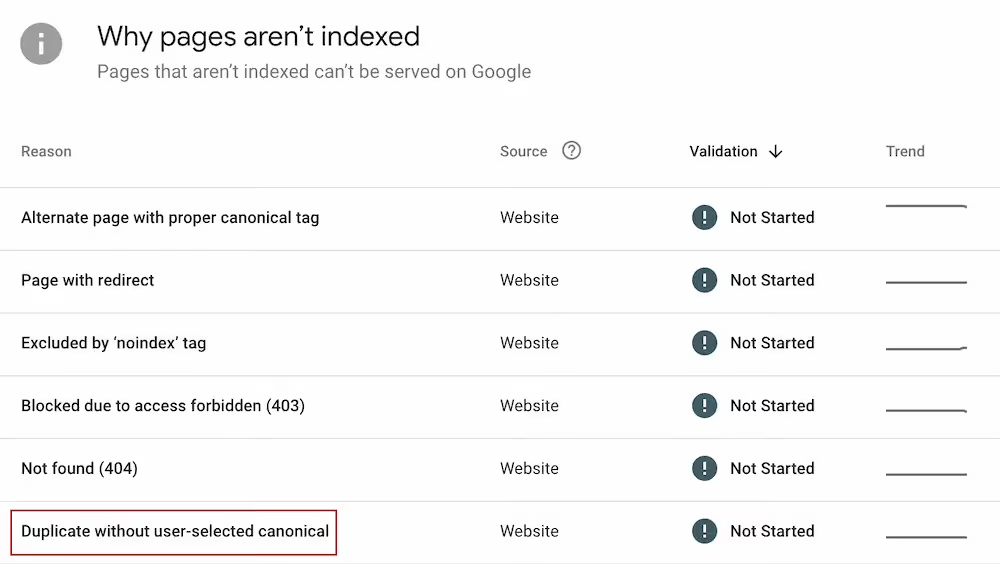
Use the Pages report section on Google Search Console to identify duplicate content.
This report will show categories like: "Duplicate, Google chose a different canonical than the user" or "Duplicate without a user-selected canonical."
Screaming Frog
Screaming Frog is a great tool that can crawl your site and find duplicate pages. Their “How to Check for Duplicate Content” article breaks down, step by step, how to use the tool to spot them.
You can use their free version to identify content that is:
- Exactly duplicated
- Near duplicated
- Semantically similar
- Low relevance
By navigating to the “Content” tab in Screaming Frog’s menu, the SEO Spider sidebar will crawl and identify this type of content on your website:

Semrush
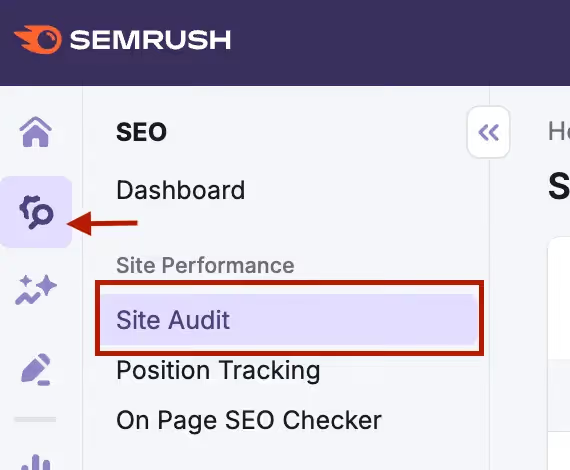
You can identify duplicate content using Semrush’s site audit tool.
- Navigate to the toolbar and select Site Audit under the SEO menu:
- Create a new project
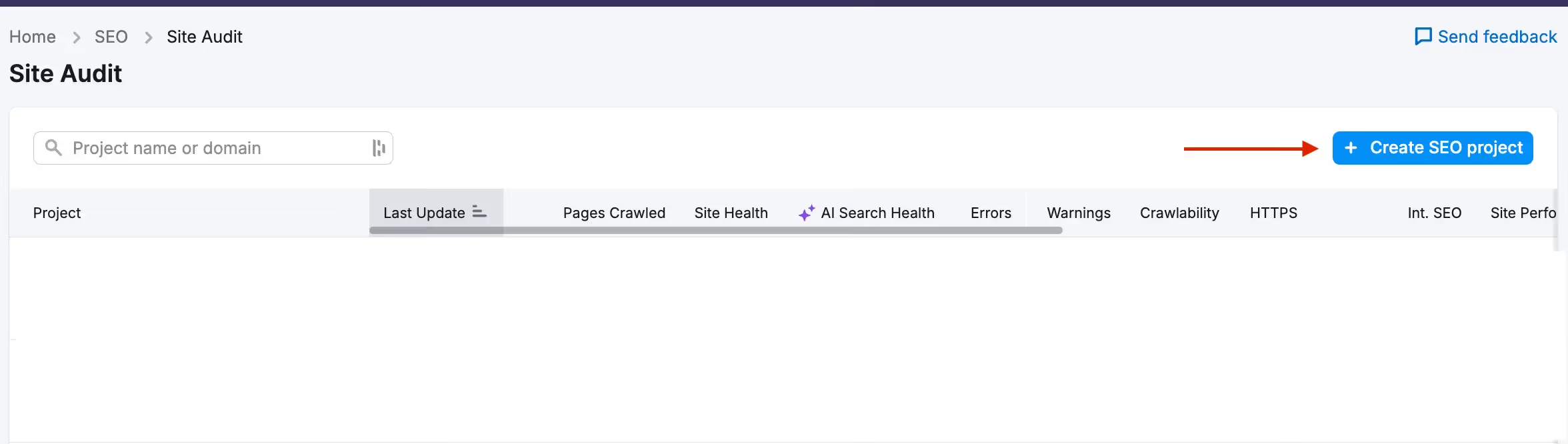
- Insert your site domain
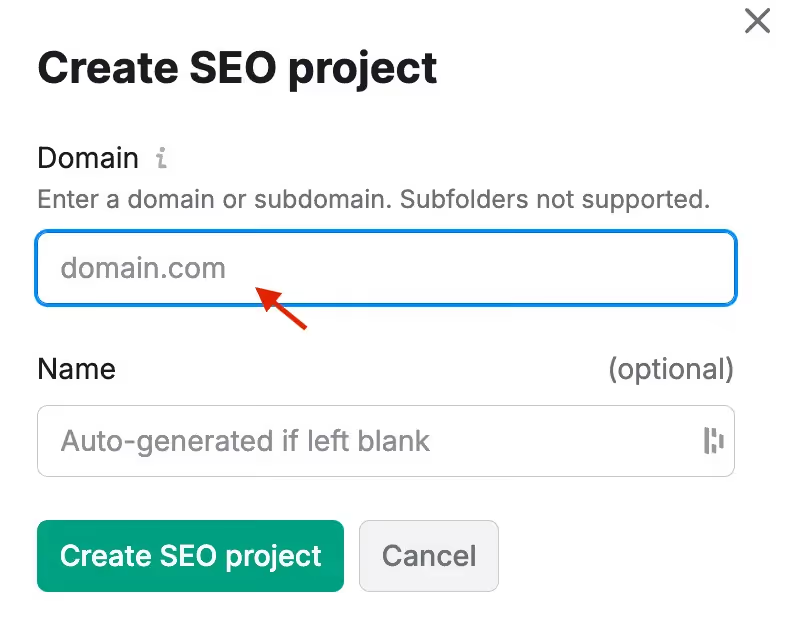
- Click on Create SEO Project and wait for Semrush to run the audit.
- Once completed, navigate to the issues tab:
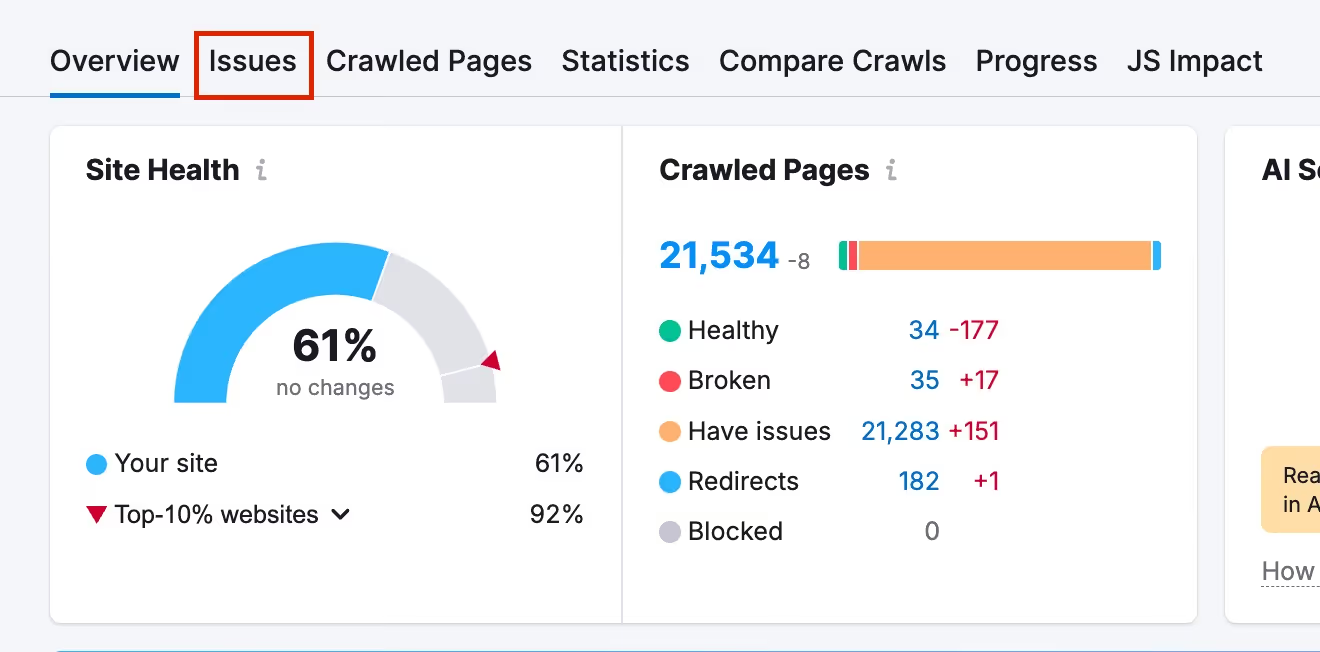
- Type “duplicate” in the search bar. Semrush will then provide you with a list of duplicate content issues across the website.
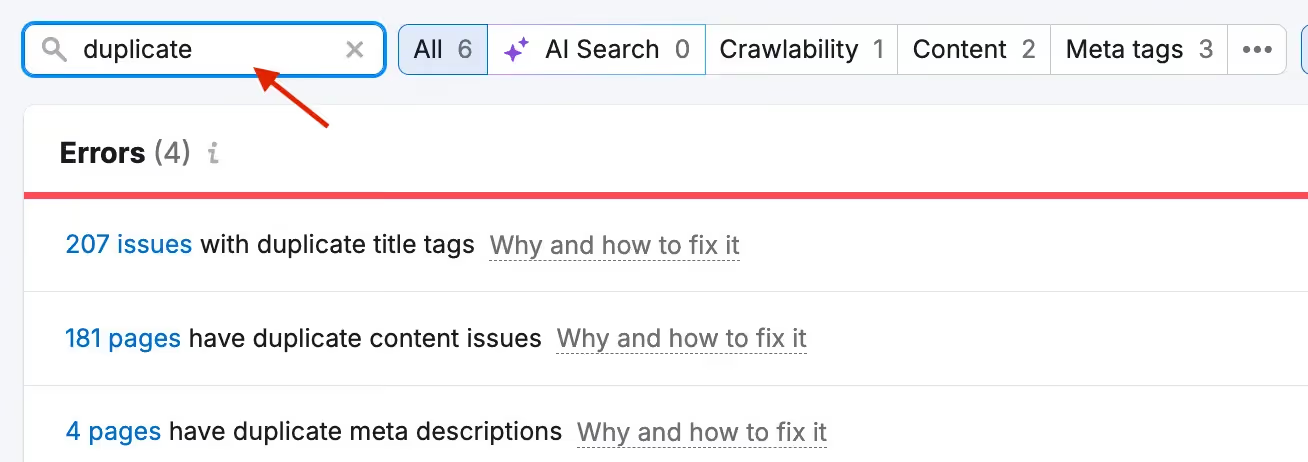
- Identify duplicate pages and determine which content needs a redirect, a canonical, a no-index tag, or rewriting.
Requesting Removal from Other Sites
If a website has issues with unauthorized, external duplicate content (content scraping), you have two options:
- If another website is using your content without permission, ask them to remove it.
- If you can’t get the website owner to comply, use Google’s DMCA tool to submit a takedown request.
How to Prevent Future Duplicate Content Issues
- Use rel="canonical" Tags: The rel="canonical" tag helps tell Google which version of the page is the preferred one. It will help Google know which page to prioritize.
- 301 Redirects for Exact Duplicates: A 301 redirect will point Google to the preferred version of your page. This helps consolidate authority to the right page.
- Noindex Meta Tag: If there's a duplicate page that you don’t want to appear in search results, use the "noindex" meta tag. This tells Google not to index that specific page, keeping it out of search results entirely.
- Add Unique Content for Location Pages: For businesses with multiple locations, each city or region should have unique content. Add city-specific landmarks, transportation options, and other relevant local details. Reorder sections or use unique headers to make each page stand out from the rest.
- Merge Similar Pages: If you have several pages that talk about similar topics, consider combining them into a single resource, focusing all important information on one page.
Final Thoughts: Duplicate Content Doesn’t Automatically Result in Penalties
While Google may not penalize you outright for duplicate content, it can still hurt your SEO efforts. By keeping your content unique, using canonical tags, and addressing duplicate issues quickly, you can make sure your site is performing the way it should in search results
The bottom line? Duplicate content isn’t a deal-breaker, but it’s something you should always keep an eye on.
Frequently Asked Questions (FAQ)
1. Does content duplication cause Google to apply penalties, or does it simply not index duplicate pages?
Google doesn’t penalize duplicate content. Instead, it selects one version of the page to index, usually favoring the most authoritative version.
2. Which is better, a canonical tag, a 301 redirect, or noindex?
Each of these tools has a specific purpose:
- Canonical Tag: Use when you have similar content but want to keep both pages live. It helps Google prioritize the right version of a page.
- 301 Redirect: For pages that should no longer exist or when you want to combine content into a single page.
- Noindex: Use for pages you don’t want appearing in search results, such as low-value duplicates.
3. Do duplicate meta titles and descriptions (even with unique body content) affect Google rankings or CTR?
Yes, identical meta titles and descriptions can hurt your click-through rate (CTR) by making your content appear less unique. This can also confuse Google’s ranking algorithms.
4. Can AI-written content become “duplicate-like” if similar across pages?
Absolutely. If AI-generated content follows similar patterns, structures, or uses repetitive phrases, it can appear duplicate-like to search engines, even if the content isn’t exactly the same.
5. How much duplication is acceptable before Google filters a page?
Google doesn’t enforce a hard rule on how much duplication is acceptable. It evaluates the value and intent behind the content. If the content has different insights and value, Google may still allow it to rank.
Excessive duplication, especially with thin content, is likely to be filtered, and only the most authoritative page will appear in search results.
6. Does duplicate content impact local SEO across multiple cities?
Yes, duplicate content can negatively affect local SEO, particularly for businesses with multiple locations. For instance, if you have similar pages for services in Reston and Fairfax, Google might flag these as duplicate or near-duplicate content and could choose to rank only one of them.